
Radon Crawl Space Mitigation, Is Encapsulation Enough to Control Radon?
A newly sealed crawl space might look like one less thing to worry about as a homeowner. Exposed soil is covered, gaps have been addressed, and the area beneath the house appears more controlled. But what about the radon moving through the ground? Covering a crawl space does not necessarily stop this naturally occurring radioactive gas from entering your home. Radon crawl space mitigation requires understanding how soil gas travels through the foundation and choosing an approach that addresses the actual problem.
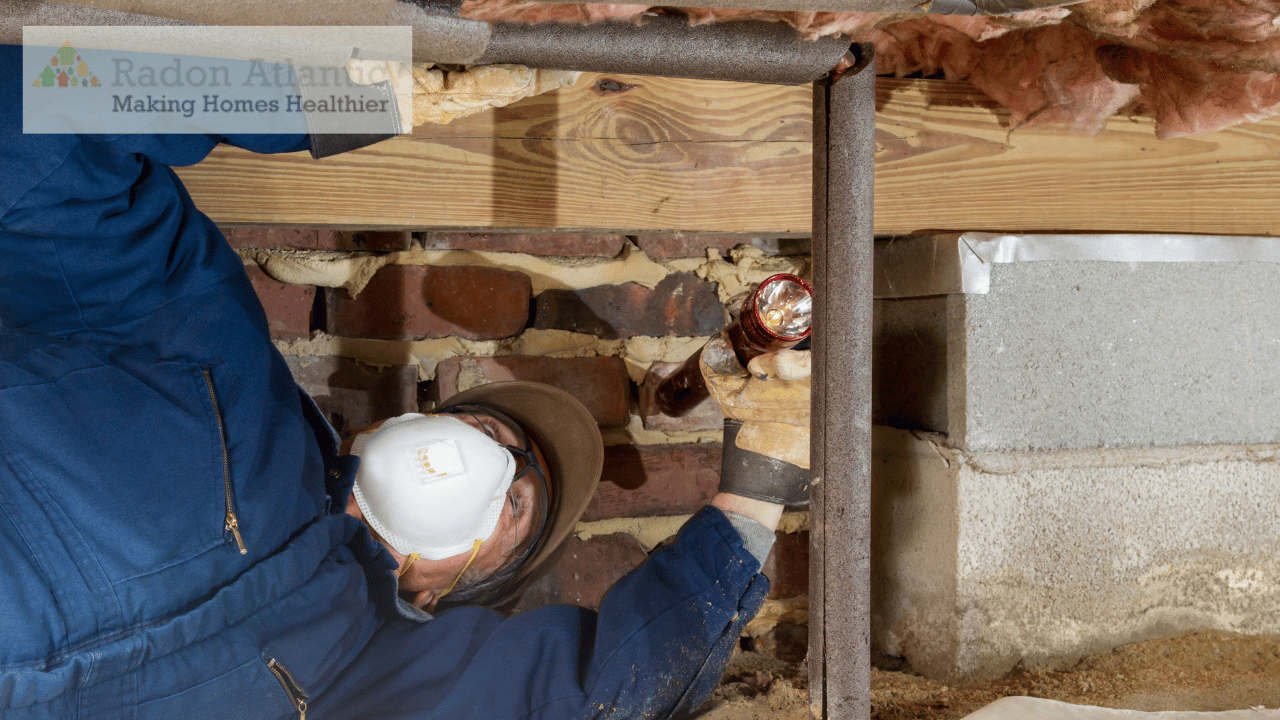
Encapsulation may improve crawl space conditions, but does it provide enough protection against radon on its own?
What Does Crawl Space Encapsulation Actually Address?
Crawl space encapsulation involves covering exposed ground with a suitable membrane and sealing selected openings to create a barrier between the soil and the enclosed space.
Homeowners may consider it when dealing with exposed earth, moisture concerns, or unwanted air movement beneath their properties.
Depending on the materials used and the quality of installation, encapsulation may:
- Cover exposed soil beneath the building.
- Create a barrier between the ground and the crawl space.
- Limit certain forms of moisture movement.
- Change the conditions within the enclosed space.
These improvements can serve a useful purpose. However, they do not establish whether radon is entering the home or confirm that indoor concentrations have been adequately addressed.
Why Can Radon Remain a Concern After Encapsulation?
Radon develops naturally as uranium in soil and rock breaks down. The gas can move through the ground and enter buildings through foundation cracks, construction joints, openings around pipes, drains, and other structural gaps.
Although a ground membrane can cover exposed soil, radon may still enter through other openings and pathways in the building’s foundation.
Consider a home where the crawl space floor has been covered with a membrane. Openings around plumbing lines, connections between foundation materials, or gaps along the perimeter may still provide pathways for soil gas. Pressure differences between the ground, crawl space, and living areas can also influence how radon moves through the property.
A sealed floor, therefore, should not be treated as proof that indoor radon levels are under control. Testing provides the information needed to determine whether further action is appropriate.
Encapsulation vs. Active Soil Depressurization: Understanding the Difference
Although both approaches may involve the crawl space, they serve different purposes.
Crawl Space Encapsulation
Encapsulation creates a physical barrier between exposed ground and the enclosed crawl space. It may form part of a broader approach to managing moisture and improving crawl space conditions, depending on the property.
Active Soil Depressurization (ASD)
ASD is an established radon mitigation method that draws soil gas away from beneath a building and directs it outdoors through a vent pipe. A fan creates the pressure difference needed to move soil gas away from occupied areas.
Radon Atlantic provides ASD solutions for different foundation configurations, including crawl space construction. System design depends on the property’s layout, construction, and radon conditions.
The distinction is important: encapsulation creates a physical barrier, while ASD is specifically designed to draw soil gas away from beneath the building. When elevated radon levels are identified, encapsulation alone should not be assumed to provide the required reduction.
What Should You Do If Your Crawl Space Is Already Encapsulated?
If you have invested in crawl space improvements, the work may still serve its intended purpose. However, it is equally important not to assume that a sealed floor has resolved a radon concern.
Consider these practical steps:
- Arrange radon testing: Measure radon concentrations in an appropriate occupied area rather than relying on the appearance of the crawl space.
- Review the building’s construction: Consider the foundation layout, crawl space configuration, and potential connections between the ground and living areas.
- Discuss suitable mitigation options: Ask a radon professional whether the existing encapsulation should be considered as part of a wider mitigation approach.
- Verify the results: If mitigation work is undertaken, arrange follow-up testing to establish whether indoor radon concentrations have decreased.
For homeowners considering radon crawl space mitigation, the priority should be to address the conditions contributing to elevated indoor radon rather than simply adding another layer of sealing.
Get Radon Mitigation Advice From Radon Atlantic
Crawl space encapsulation may address certain ground and moisture-related conditions, but its presence does not confirm that indoor radon levels have been adequately reduced. If your property has an encapsulated crawl space, testing can help establish whether radon remains a concern and whether additional measures are necessary.
Radon Atlantic provides radon analysis, risk assessment, and mitigation services, including Active Soil Depressurization (ASD) and Heat Recovery Ventilation (HRV) systems. Its approach considers the property’s construction and radon conditions when identifying suitable solutions.
If you have already encapsulated your crawl space but remain concerned about indoor radon levels, radon crawl space mitigation may be worth discussing with a professional. Contact our team to explore assessment and mitigation services for your property.