
Archive for year: 2026

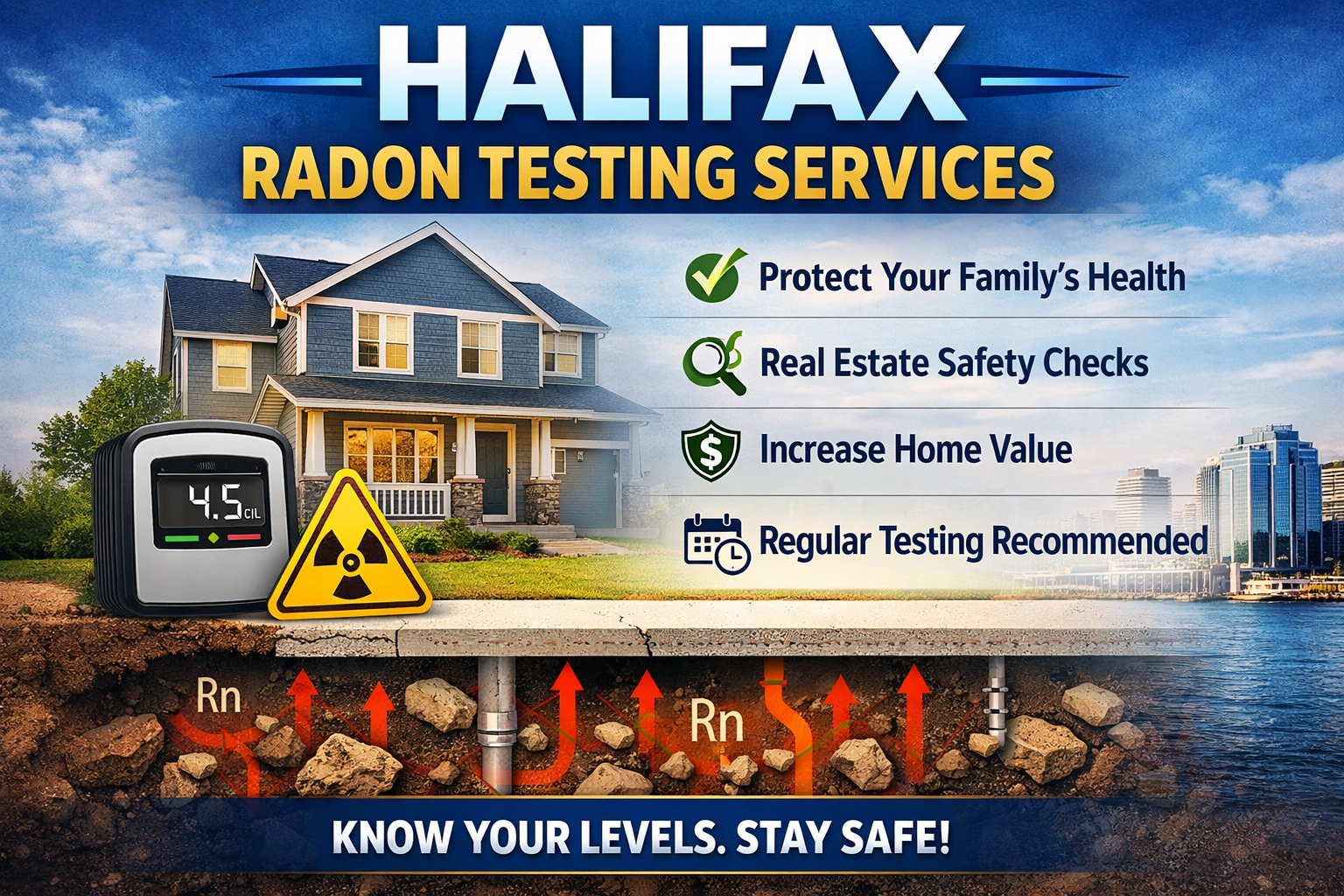
Halifax Radon Testing Services

7 Compelling Reasons to Book Halifax Radon Testing Immediately

Radon is invisible, odorless, and tasteless, which makes it easy to overlook. It can enter homes through foundation cracks or floor drains, so professional testing is important to understand potential risks. That’s why Radon Atlantic recommends Halifax radon testing for every household.

Most homeowners don’t realize that scientific studies show radon exposure is a leading risk factor for lung cancer, second only to smoking. Testing may help identify potential risks and guide steps to reduce exposure.

1. Protecting Your Family’s Health

The main reason to test is health. Long-term exposure to elevated radon levels may increase the risk of health issues, which is why identifying levels early is recommended.

Because the gas is heavier than air, it tends to settle in basements, crawlspaces, and lower-level rooms—often the same spaces where kids play or where home offices are set up.

Our radon testing service helps identify potential radon risks so you can take preventive measures to reduce exposure.
2. Getting Real Peace of Mind

Even if your home looks perfect and was built recently, there is no way to know the radon levels without a proper test. We have seen beautiful, brand-new homes with high levels and older homes that are perfectly fine.

Many families tell us they sleep better once their home’s indoor environment has been checked.

  • We provide accurate results and honest advice.
  • Our goal is to give you confidence in your living space.
  • Knowing the numbers means you aren’t guessing.

3. Staying Current with Real Estate Trends

If you are currently buying or selling a home in Halifax, you have probably noticed that radon testing is becoming a standard part of the inspection process.

  • For buyers: proof that the home is safe.
  • For sellers: fix issues before they impact price.

4. An Easy and Affordable Process

Some people put off testing because they think it’s going to be a big, expensive ordeal involving construction. That isn’t the case.

Professional testing is cost-effective and non-invasive. Detectors are placed in strategic areas and monitored over time.

  • No noise
  • No dust
  • No disruption

Once completed, you receive a clear, easy-to-understand report.

5. Early Detection Leads to Fast Solutions

If radon levels are high, solutions are usually straightforward and affordable.

Common solutions include:

  • Sealing foundation cracks and gaps
  • Improving ventilation
  • Installing venting systems

Radon Atlantic ensures all mitigation is handled professionally.

6. Guarding Your Largest Investment

Your home is likely your biggest investment. Reducing radon exposure helps maintain property value.

Homes with documented Halifax radon testing are often more attractive to buyers.

7. Why Regular Checks Matter

Radon levels can change over time due to:

  • Seasonal changes
  • Renovations
  • Ventilation changes

Regular testing helps you stay proactive and safe.

Conclusion

Radon may be invisible, but it can pose risks over time. From protecting your family’s health to maintaining your home’s value, testing is an important step.

Schedule a professional radon test with Radon Atlantic to understand your home’s radon levels and take informed action.

Visit: https://www.radonatlantic.com/
Call: 902 444 8724

Radon in Nova Scotia

Think Your Home Is Safe? What the Nova Scotia Radon Map Suggests

Radon is an invisible gas that you can’t smell or taste. It happens naturally when uranium in the ground breaks down, and while it’s all over the place, it doesn’t settle in every spot the same way. This is why the Nova Scotia radon map is such a big deal for anyone living in or moving to the province. It gives homeowners a head start on understanding the risks in their specific neighbourhood.

At Radon Atlantic, people always ask us: “If the map says my area is low risk, can I just skip the test?” The honest answer is no. To understand why, you have to look at how these maps are actually built.


Halifax certified HRV contractors


What the Nova Scotia Radon Map Really Tells You

The Nova Scotia radon map isn’t a magic crystal ball. It’s a visual tool made by looking at soil types, rock formations, and thousands of old test results. It’s great for seeing the “big picture” of where radon might be more common across the province.

Here is the breakdown of what the map is actually doing:

  • It tracks trends: It shows which regions have a higher statistical chance of elevated gas.
  • It follows the geology: It points out areas where the soil is more likely to release radon.
  • It highlights past data: It shows where other people have found high levels before.

But here is what it cannot do: It can’t tell you the radon level in your specific basement. It doesn’t know if your foundation has a tiny crack or how your home was built. Two houses right next to each other can have totally different readings.

Why Nova Scotia is a Radon Hotspot

Our province has a unique geological makeup. The ground here often has geological conditions that can allow radon to move from the soil into crawlspaces and basements. Because our winters are cold, we seal our homes up tight to keep the heat in. This is great for your power bill, but it’s bad for radon, as the gas can become trapped indoors and may accumulate to elevated levels over time.

Long-term exposure to elevated radon levels is recognized by health authorities as a leading cause of lung cancer among non-smokers. This is why we tell everyone in the province to test their home, no matter what colour their zone is on the map.

Using the Map the Right Way

Think of the Nova Scotia radon map as a warning sign on a highway. It tells you to be alert, but it doesn’t mean you can stop paying attention to the road.

  • It’s a starter, not a finisher: Use it to start a conversation about safety.
  • Low risk isn’t “no” risk: Homes in ‘low potential’ zones have tested above recommended radon guideline levels.
  • It’s a regional guide: It’s about the neighbourhood, not your specific property.

Why You Can’t Skip the Test

Testing is the most reliable way to understand the radon level inside your home. Radon is a “silent” problem—you won’t feel sick or notice a weird smell while it’s happening.

  1. New homes are affected too: Modern, airtight homes can actually trap radon more effectively than drafty old ones.
  2. Renovations change things: If you finish your basement or change your ventilation, your radon levels can shift.
  3. It’s affordable: A test is a small price to pay for understanding your indoor air quality.

Professional Help from Radon Atlantic

We specialize in testing and fixing radon issues across the province. If your test comes back high, don’t panic. Mitigation systems are proven to significantly reduce indoor radon levels. They basically act as a vacuum that pulls the gas from under your house and vents it safely outside.

Buying or Selling? Radon is becoming a major point in Nova Scotia real estate. Buyers are asking for tests more than ever before. If you are selling, having a clear test result shows proactive ownership and helps reduce uncertainty for potential buyers.

The Bottom Line

The Nova Scotia radon map is a great educational tool, but it is not a substitute for a real test. Don’t rely on what happened at your neighbour’s house or what a map says about your county. One of the most effective ways to protect your family is to get accurate data for your own home.

For professional radon testing in Nova Scotia, contact 902 444 8724 or visit https://www.radonatlantic.com/ today.

Nova Scotia Radon Map

Think Your Home Is Safe? What the Nova Scotia Radon Map Suggests

Radon is an invisible gas that you can’t smell or taste. It happens naturally when uranium in the ground breaks down, and while it’s all over the place, it doesn’t settle in every spot the same way. This is why the Nova Scotia radon map is such a big deal for anyone living in or moving to the province. It gives homeowners a head start on understanding the risks in their specific neighbourhood.

At Radon Atlantic, people always ask us: “If the map says my area is low risk, can I just skip the test?” The honest answer is no. To understand why, you have to look at how these maps are actually built.

Halifax certified HRV contractors


What the Nova Scotia Radon Map Really Tells You

The Nova Scotia radon map isn’t a magic crystal ball. It’s a visual tool made by looking at soil types, rock formations, and thousands of old test results. It’s great for seeing the “big picture” of where radon might be more common across the province.

Here is the breakdown of what the map is actually doing:

It tracks trends: It shows which regions have a higher statistical chance of elevated gas.

It follows the geology: It points out areas where the soil is more likely to release radon.

It highlights past data: It shows where other people have found high levels before.

But here is what it cannot do: It can’t tell you the radon level in your specific basement. It doesn’t know if your foundation has a tiny crack or how your home was built. Two houses right next to each other can have totally different readings.

Why Nova Scotia is a Radon Hotspot

Our province has a unique geological makeup. The ground here often has geological conditions that can allow radon to move from the soil into crawlspaces and basements.

Because our winters are cold, we seal our homes up tight to keep the heat in. This is great for your power bill, but it’s bad for radon, as the gas can become trapped indoors and may accumulate to elevated levels over time.

Long-term exposure to elevated radon levels is recognized by health authorities as a leading cause of lung cancer among non-smokers. This is why we tell everyone in the province to test their home, no matter what colour their zone is on the map.

Using the Map the Right Way

Think of the Nova Scotia radon map as a warning sign on a highway. It tells you to be alert, but it doesn’t mean you can stop paying attention to the road.

It’s a starter, not a finisher: Use it to start a conversation about safety.

Low risk isn’t “no” risk: Homes in ‘low potential’ zones have tested above recommended radon guideline levels.

It’s a regional guide: It’s about the neighbourhood, not your specific property.

Why You Can’t Skip the Test

Testing is the most reliable way to understand the radon level inside your home. Radon is a “silent” problem—you won’t feel sick or notice a weird smell while it’s happening.

  1. New homes are affected too: Modern, airtight homes can actually trap radon more effectively than draft old ones.
  2. Renovations change things: If you finish your basement or change your ventilation, your radon levels can shift.
  3. It’s affordable: A test is a small price to pay for understanding your indoor air quality.

What is Happening Under Your House?

A few things decide how much gas gets into your living space. The soil type under your floor is the biggest factor, but things like foundation cracks, sump pumps, and even the air pressure inside your house play a role.

Because these things are different for every building, the Nova Scotia radon map can only tell you so much.

Professional Help from Radon Atlantic

We specialize in testing and fixing radon issues across the province. If your test comes back high, don’t panic. Mitigation systems are proven to significantly reduce indoor radon levels. They basically act as a vacuum that pulls the gas from under your house and vents it safely outside, significantly reducing the amount of radon entering the home.

Buying or Selling? Get the Facts

Radon is becoming a major point in Nova Scotia real estate. Buyers are asking for tests more than ever before. If you are selling, having a clear test result can actually make the process smoother. It shows proactive ownership and can help reduce uncertainty for potential buyers.

The Bottom Line

The Nova Scotia radon map is a great educational tool, but it is not a substitute for a real test. Don’t rely on what happened at your neighbour’s house or what a map says about your county. One of the most effective ways to protect your family is to get accurate data for your own home.

For radon testing in Nova Scotia, contact 902 444 8724 or visit https://www.radonatlantic.com/ today.


Radon Map Nova Scotia